06 October 2019

Farewell to the godfather of Czech pop: Karel Gott

Image result for karel gott

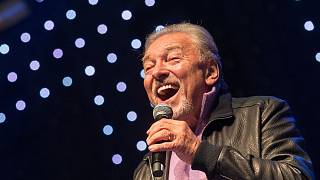
Czechs are currently mourning one of their greatest and most beloved popstars: Karel Gott.

His big voice and big smile made him a hit sensation from the 1960s onwards and he sold millions of records throughout his long career.

His biggest markets were Czechoslovakia, Germany and Russia. His folk-style Schlager went down well in those parts.

I first became acquainted with him whilst watching the film Kdyby tisíc klarinetu (1965). He plays himself - already a pop star back then. The film is full of music. With a little help from a statue of Bach, all the weapons on a military camp turn into musical instruments to the delight of one pacifist soldier. Well worth watching.

Back to Gott (which is German for God, if you weren't so sure). He had four daughters with three different women and now he will have a semi-state funeral with a service by the archbishop of Prague.

Some Czechs (not many), are not only questioning his Catholic credentials, but also whether such an honour should be bestowed upon someone who was simply a popular singer. He largely rode above political issues during his long career and remained content with communism as long as he could cut his records and continue to travel (something most of his countrymen were unable to do).

Give him his service, I say. He was a happy-go-lucky guy who enjoyed singing and entertaining. To reach 80 in the music industry is quite an achievement. After all, drugs and alcohol don't seem to have been big issues for him and with a name like his who could deny him a holy send off?


A clip of Karel Gott singing in the film Kdyby tisíc klarinetu - If a Thousand Clarinets (1965).

26 August 2018

Josef Koudelka Invasion Prague 68 photo exhibition


August, 2018 - Nowadays it is difficult to comprehend the events in Prague that happened 50 years ago this month. Why and how on earth did tanks and soldiers end up storming around the cobbled streets of this beautiful European city? To the people of Prague back then, it was not only bewildering, but terrifying.

Invasion Prague 68 is a touring exhibition that showcases the photos of Czech photographer Josef Koudelka who was on the streets with his camera in August 1968. This reviewer saw the exhibition whilst on display at Botanique in Brussels from 14 June to 12 August 2018.

The giant black and white photos are stark and life-like. Anxious faces leap out at you as smoke from angry fires, tank guns and armed soldiers straddle the urban setting with disdain.

This is high calibre press photography - the viewer is literally thrown onto the streets of Prague, the confusion and the utter disbelief that so-called allies are invading the country.

For a brief time leading up to the invasion of Czechoslovakia by Warsaw Pact troops led by the Soviet Union, the Prague Spring had heralded the dawn of a more humane system: 'Socialism with a Human Face'. But Moscow was not amused - the lifting of censorship and burgeoning freedom of expression in Czechoslovakia could not be allowed to spread (uncovering uncomfortable truths about the past and openly criticising communism and its leaders).

Koudelka's photos were smuggled out of the country and published in the international press one year later with the anonymous credit of P.P. (Prague Photographer). It was only long after he had emigrated/escaped to the West during the 80s that Kodelka was able to take the credit for the photos. In the meantime his photos had won numerous prestigious photography awards and become emblematic of the tyranny of the Soviet Union.

Remarkably, the history of this invasion is neither deeply nor widely understood. It is more sexy to focus on the student protests and countercultural revolution that gripped many countries around the world in that very same year.

Koudelka's photos reveal the grotesque dichotomy of a tank accosting peaceful citizens trying to go about their everyday business. Many important questions are raised that need investigating.

25 April 2016

WWII memoir with a twist

US troops march through a wood as they move to liberate Germany in 1945.

The Past is Myself by Christabel Bielenberg is a fascinating account of life in Germany from about 1930 to 1945. 'Oh no, not another turgid Nazi-era memoir!' you're thinking. The 'twist' here is that the author is English.

Christabel is married to a German from Hamburg called Peter. Both husband and wife watch the rise of the Nazis with utter surprise, horror and dismay.

What shines throughout the whole story is Christabel's incredibly strong character and humour. She endures long periods of the war separated from her husband and is more or less left to raise three young sons by herself.

As allied bombing draws closer and closer to their little house in Berlin, the family is eventually forced to evacuate to a little village in the Black Forest. Here, they experience the incredible warmth and hospitality of the locals who more or less ignore all Nazi rules and decrees as far as possible. The experience of liberation by French troops turns out to be a rather terrifying experience as much raping and pillaging ensues.

What stands out in the book are the many German friends that Christabel has who totally despise the Nazis yet are unable to openly express their opposition for fear of being dragged away to Gestapo HQ.

Christabel and her husband are in fact friends with many of the July 1944 plotters who attempted and failed to blow Hitler up with a bomb hidden in a suitcase. Although, this was a popular selling point for the book when it was first published in 1968, it is most valuable for its detailed and insightful observations of everyday life under the Nazis.

The author does employ a rather old-fashioned style which is sometimes a little heavy to get through, but persevere and you will be rewarded. Highly recommended for anyone interested in history as well as fans of memoir and women's history and literature.

The Road Ahead is the follow-up novel by Christabel which recounts her family's emigration to Ireland after the war. There are interesting reflections on Irish life and society at the time, but the book lacks the bite and drama of her first one.

31 October 2015

Johnny Cash - The Life by Roger Hilburn


There was much more to the man in black than his stage persona revealed. This well-written and thoroughly-researched biography by LA Times journalist Robert Hilburn traces Cash's development from youth to old age and ill health with remarkable sensitivity and warmth.

The central focus is the evolution of Cash as a musician. From a boy who loved to sing gospel songs with his mum - to a man strumming his guitar with air force pals - on to starting a garage band and eventually after thousands of miles touring across America, a spell of super-stardom before the inevitable fall.

Hilburn goes into detail about most of the songs ever written by Cash and quotes many of the lyrics at length. This really brings his subject to life and it's a joy to read song texts penned by Cash. If you know the songs you will certainly hear his voice and music in your head as you read. Seeing the lyrics on paper it's clear that Cash is a storyteller and poet of great style and wit.

Here are the top 5 new things I learnt about Cash reading this book:

1. His Christian faith played a huge part in his life. He regularly read the Bible and even wrote a book about St John. Despite this he almost never went to church.

2. He wrote Walk the Line for his first wife Vivian. He tried to remain faithful to her and was terrified of separating from her. In the end, it was she who filed for divorce.

3. His return to the music charts with the album American Recordings in 1994 owed a great deal to the inspirational work of music producer Rick Rubin who reinvented Cash at the height of the grunge movement.

4. He was in an incredible amount of pain and on a cocktail of about 40 pills a day as he recorded his last albums with Rubin. Sometimes he was so out of breath that his voice was reduced to a whisper. Engineers had to piece his last songs together from hundreds of takes.

5. Cash was a terrible driver and was in many car accidents. Once he crashed a camper van in the middle of a national park. He ended up by causing a wildfire in which scores of endangered eagles were killed. He got off with a hefty fine.

Of course the book also covers the drug addiction and the famous prison concerts with panache, but there is so much more to Cash and therefore the book than that. An added richness is the cultural context which Hilburn lucidly paints from the 1950s to the beginning of the 21st century.  This book sits not only within biography but within the historiography of 20th century music - doing Cash justice as one of America's biggest musical icons of the last century.


Drive On from the album 'American Recordings' (1994) is one of the lesser known songs by Cash that I discovered whilst reading the book. He was a prolific artist.


23 May 2015

Film review: Cartoonists - Foot Soldiers of Democracy


This film follows 12 political caricaturists in 12 different countries. In broad brush strokes the documentary illustrates the convergence of power, greed and corruption through the sharp mocking eyes of the cartoonists.

Despite very different political contexts, the cartoonists have the ability to upset those in power, whether in France, Venezuela, Tunisia or Denmark.

There are some elegant sweeping panoramas of the different global locales and of course a lot of smart talk from the cartoonists themselves.

Unfortunately, it is difficult to fully take in the cartoons that are intermittently displayed full-screen. You simply don't have time to appreciate the jokes when having to read translations and take in the subtleties of the artwork on offer at the same time.

The cartoonists featured are brought together by the Frenchman, Plantu, who set up a group at the UN called 'cartoonists for peace.' They advocate for press freedom and defend the right to tackle sensitive subjects, even if they seriously offend people.

The film gains great relevance in the aftermath of the Charlie Hebdo attacks. It is well worth watching and may help you to more clearly see where your boundaries are when it comes to freedom of expression versus any form of censorship.

27 March 2014

War in Syria - Who's Watching?


'Return to Homs' was screened in Brussels on Tuesday night as part of the One World film festival. It was a gripping and heartbreaking portrayal of the war in Syria from the rebels-eye-view.

About 200 people attended the screening at the Czech Representation to the EU. Only about half of those stayed for the panel debate afterwards.

Šimon Pánek, director of People in Need, the NGO behind the event, looked grim-faced and weary as he listened to Syrian opposition figures express their frustration with the international community for not helping them.

After 20 years in the humanitarian relief business, one sensed that he'd seen it all before. He referred to the siege of Sarajevo. Eventually something was done there.

Who knows how long it will take for 'something' to be done in Syria.

Overall, the event was an admirable and well-organized effort to raise public awareness of the war in Syria. One just wishes that it could have reached more people. There was no evidence of media coverage.

With so many conflicts in the world, where do you start?

At least another 200 people have a greater insight onto the war and will hopefully pass on their experience to family and friends.

Europeans have the luxury of choosing which conflicts to follow. How long before that choice disappears?


25 March 2014

John Mayall - 80 Years Young

Veteran British bluesman John Mayall is on his 80th birthday tour. Some of these guys never stop! In some cases this is a good thing. Old Johnny rocked the house in Brussels on Friday night.

His voice was as clean as a whistle as he ripped through bluesy odes to young love like Wild About You and the cheeky Help Me with the refrain: "You got to help me, baby I can't do it all by myself!"

The band sure did help their frontman to pack a punch. The rhythm section really were as tight as a camel's ass in a sandstorm and there's no denying it. Greg Rzab on bass and Jay Davenport on drums really kept the crowd shaking. Rzab even unleashed some slap-bass wizardry. Davenport kept low-profile and a real drum solo wouldn't have gone amiss.

Mayall is known for bringing up countless guitar greats like Clapton and Green, and Rocky Athas didn't disappoint. On his sunburst Les Paul his tone and attack would have done the late great Gary Moore proud. A fairly implacable showman, but he let his guitar do the talking.

Mayall was a scion of good health, prancing from keyboards to guitar to harmonica and back again. Maybe we should all give up alcohol 25 years ago like him. Whilst his fret work was a little shaky, his keys and mouth organ were a real delight.

The overall sound balance was perfect and Ancienne Belgique everything a modern concert hall should be - sleek, refined and convivial. After the concert the whole band began dishing out autographs like sweets in the bar. Somebody's Acting Like a Child indeed!